

Why the North Yorkshire Coast Rewards a Careful Sailor
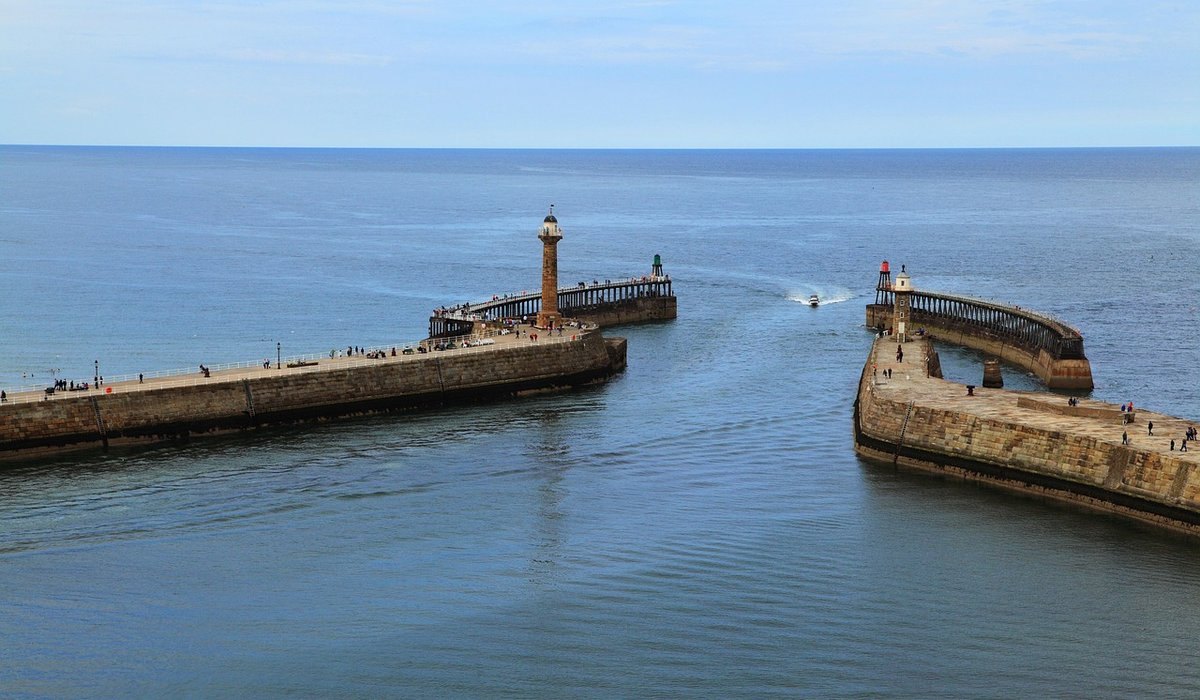
Whitby is one of the friendliest places on the east coast to begin a sailing life. You have a sheltered harbour, a well-marked entrance between two stone piers, and a coastline that offers short, achievable passages in almost every direction. North takes you towards Runswick Bay and Staithes; south along Saltwick Nab and the cliffs to Robin Hood's Bay; and with a fair wind and a full day, Scarborough and Filey beyond.
But the coast also asks for respect. The tidal range here is significant, the sea can build quickly in an onshore breeze, and the harbour mouth has a shallow bar that changes character with the weather. None of that should put you off. It simply means that a little planning before you slip your lines will make the difference between a nervous first trip and a genuinely lovely one.
Read the Tide Before You Read the Wind
Tides on this stretch rise and fall by roughly four to five metres at springs, and the tidal streams run broadly along the coast rather than across it. As a rule of thumb the flood sets northwards and the ebb southwards, turning somewhere near local high and low water — but the exact timing shifts through the cycle, so check a tidal stream atlas or a reliable planning tool for the day you are going.
Two practical points matter more than anything else for a beginner:
- The harbour bar. Whitby's entrance is shallowest around low water, and an onshore swell can make it uncomfortable or, at worst, unsafe. Aim to leave and return with plenty of water under you — a couple of hours either side of high water is a sensible starting rule for a small yacht, and the harbour office will happily tell you what the day is doing.
- Wind over tide. When a fresh breeze runs against the stream, the sea shortens and steepens. If you have a choice, plan your passage so the strongest wind and the strongest tide are not pulling in opposite directions.
Write your plan down with timings, then work backwards from your return. A short hop south to Robin Hood's Bay and back is a full, satisfying day for a new crew.
Local Wind Patterns You Can Rely On
On warm, settled summer days the sea breeze is the reliable companion of the Yorkshire coast. It usually fills in from the east or north-east through late morning and builds to a steady Force 3 or 4 by mid-afternoon, then fades with the evening. It is gentle and predictable — an excellent teacher of sail trim.
Watch for three other habits of this coastline:
- North-easterlies. These bring swell and chop straight into the bay and make the harbour entrance livelier than the forecast suggests. Treat them with caution and keep a passage plan that lets you turn back early.
- Westerlies off the moors. The wind comes over the cliffs and arrives gusty, shifty and full of holes. Expect the wind to bend and drop in the lee of the headlands north of Whitby.
- Dawn calm and evening glass. Early mornings are often the quietest, and the last hour before dusk can flatten beautifully. Both are worth planning around.
Safety Checks Before You Cast Off
Run through the same list every single time, even for a two-hour sail. It takes five minutes and it builds good habits for life.
- Check the inshore waters forecast, plus the outlook for the next twelve hours, not just the next three.
- Lifejackets on and fitted properly, for everyone aboard, before you leave the berth.
- VHF radio switched on, tested, and listening on channel 16. Know how to raise the coastguard and what you would say.
- Engine checks: fuel, cooling water, oil, and a working kill cord if you have an outboard.
- Anchor stowed and ready with adequate warp — a surprising number of first trips end with a fouled propeller or a sudden calm.
- Water, warm layers, a hot drink, and a simple first-aid kit. The North Sea is colder than it looks.
- Tell someone ashore your route, your crew and your expected return time. Then tell them when you are back.
A First Passage: Whitby to Robin Hood's Bay
Around six nautical miles south, this is the classic beginner's voyage on this coast. Leave the piers behind, keep clear of the busy inshore traffic, and pick out the landmarks as they come: Saltwick Nab, then the long line of cliffs towards Hawsker and Ravenscar, with the village of Robin Hood's Bay tucked below at the end of it.
The bay itself dries out at low water, so plan to arrive near high tide if you intend to anchor or go ashore. Landing is best from a dinghy and worth the effort for the climb down to one of the most atmospheric villages in England. If the weather turns, turning back north with the flood stream under you is quick and reassuring.
Heritage, Etiquette and Learning from Locals
Whitby's maritime story is written into everything you see: the whaling ships and herring fleets, the lifeboat station, the abbey ruins above the harbour, the shipyards that once lined the Esk. Today the harbour is a working one, and the etiquette is simple. Give way to fishing boats and commercial craft, never anchor in a marked channel, keep a sharp lookout for pot buoys, and slow down near moorings and the shore.
Keep your distance from seals hauled out at Ravenscar and from nesting seabirds on the cliffs, and take your rubbish home. Finally, talk to people. The sailors, harbour staff and fishermen of this coast are generous with their knowledge, and a friendly question at the pontoon about the state of the bar or the afternoon breeze will teach you more than any chart. Sail carefully, come back often, and this coastline will look after you.


Coding is used in almost all aspects of life and work now, be it directly or indirectly. It’s not just for companies in the tech sector. “An increasing number of businesses rely on computer code,
Coding is used in almost all aspects of life and work now, be it directly or indirectly. It’s not just for companies in the tech sector. “An increasing number of businesses rely on computer code,
Coding is used in almost all aspects of life and work now, be it directly or indirectly. It’s not just for companies in the tech sector. “An increasing number of businesses rely on computer code,