

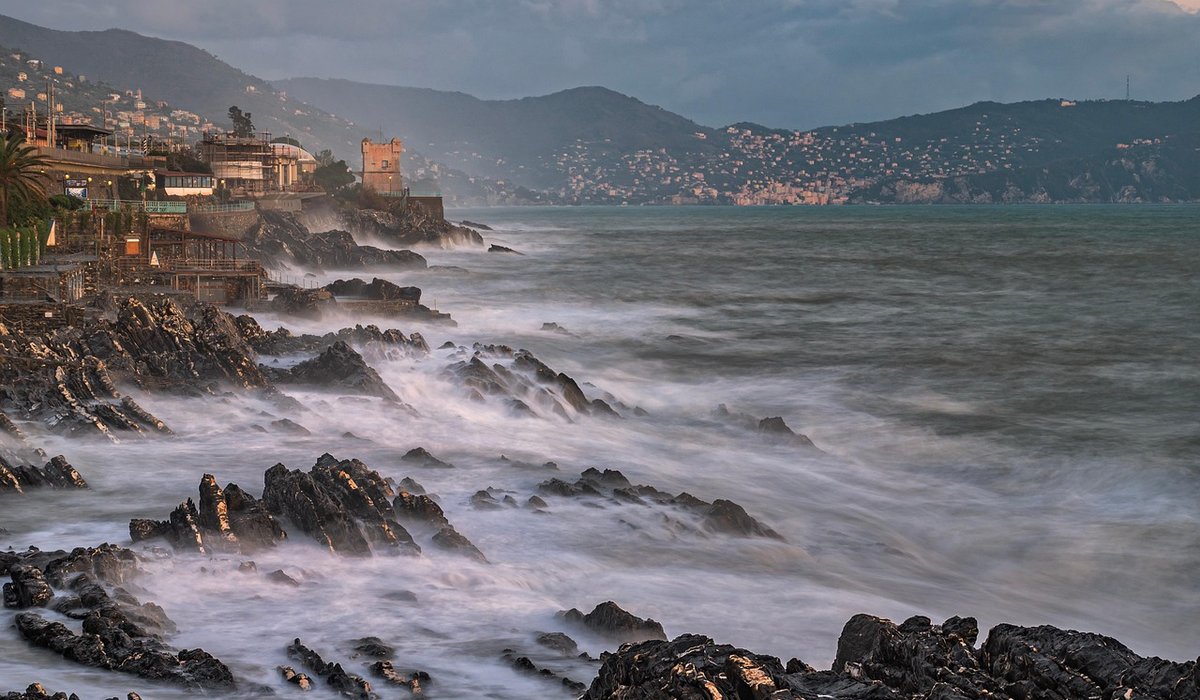
The headland advantage
Stand on almost any cliff top between Staithes and Filey and you are looking at water that drops quickly into the North Sea. Within a few hundred metres of shore the sea bed can fall to twenty metres or more, and further out the old glacial channel and deeper gravel banks push past eighty. Cold, well-mixed water, strong tidal streams and a summer plankton bloom add up to a rich larder of sandeels, herring and sprat. Where the fish gather, so do the predators — and unlike a boat trip, a headland gives you height, a fixed horizon and as many hours as your flask allows.
The trick is simply to think in terms of a sea watch rather than a stroll. Twenty minutes of scanning rarely delivers; an hour and a half often does.
What you might actually see
Three species account for nearly all the sightings from this coast, and each behaves differently enough to identify with practice.
- Harbour porpoise — present all year, easiest in a flat calm. The size of a large person, dark-backed with a low triangular fin. They rarely show the whole animal: look for a slow rolling movement, like a small wheel turning over just beneath the surface.
- Minke whale — best from June to September. Eight to ten metres long, with a small, hooked dorsal fin set well back on a long back. A minke surfacing three or four times before a longer dive is a classic sequence. Their blow is a faint, low puff, easily missed in a breeze.
- White-beaked dolphin — later summer and early autumn, often in loose groups, often noisy. Chunky and boldly patterned, with a pale saddle behind the fin. Fast, splashy and frequently heading purposefully in one direction.
Add grey seals (easily mistaken for a whale's head at distance, at least until it stops sinking), the odd basking shark in July and August, and the chance of a bottlenose dolphin or a humpback, which turn up more often in recent years than the old records would suggest.
The best watchpoints
You do not need a secret spot, just a good angle on deep water and a safe place to stand.
- Filey Brigg — the limestone reef juts out into the bay and funnels fish along its edge. Excellent in a light westerly.
- Scarborough's Castle Headland and Marine Drive — high, accessible and with a wide sweep of the bay to scan.
- Ravenscar and the Peak Steel path — exposed, dramatic and usually quiet, with deep water close in.
- Kettleness and Saltwick Nab — near Whitby, with strong tidal movement past crumbling alum-work cliffs.
- Whitby's East Cliff and the West Cliff promenade — the easiest option on a windy day and a fine place to pause over a coffee.
- Hunt Cliff at Saltburn and the Cowbar Nab at Staithes — both give long views along the coast and a good chance in a moderate swell.
Whitby, incidentally, is a reminder that this coast has been reading the sea for centuries. The whalebone arch on West Cliff recalls the town's Arctic whaling trade, and the Scoresby family — father and son, both Whitby masters and both serious observers of northern seas — turned that trade into genuine science. Watching for a minke from the cliff above is a modest continuation of an old local habit.
Weather, tide and light
Two factors decide whether a watch is worthwhile. The first is sea state: anything above a gentle chop and porpoise fins disappear into the clutter. A light offshore wind — westerly or south-westerly on this coast — flattens the water close in and is worth waiting for. The second is light. Because the coast faces east, mornings put the sun in your eyes and glaze the surface. From early afternoon onwards the glare lifts and every fin stands out.
Tide matters less than anglers claim, but the two hours either side of high water often bring fish and dolphins within sight of the cliffs, and a running ebb past a headland concentrates activity. Aim for a settled, bright day with a sea like glass and you have given yourself the best odds available.
Technique, kit and safety
Good binoculars are the single best investment. Something in the region of 8x42 or 10x50 works well: a wide field of view matters more than magnification, because you need to find a small, brief target quickly. Scan in slow horizontal strips, working from the horizon towards the shore, then start again. Keep your elbows braced on a wall or your knees, and use your naked eye first — a splash or a sudden flock of feeding gulls will tell you where to point the glass.
- Warm layers, a windproof shell and gloves, even in August.
- A notebook or phone for time, position and direction of travel.
- A camera with a long lens if you have one — dorsal fin photographs help identify individual animals.
- Stay well back from cliff edges, keep dogs on leads near seabird colonies, and never let a sighting tempt you onto unstable ground.
Patience, and what to do with a sighting
Sightings come in flurries. Most watches end blank, and the one that produces a minke ten minutes after you nearly left is the one you remember. Give a headland a proper hour, in the right conditions, at the right time of year, and you give yourself a genuine chance. Record what you see — species, number, behaviour, sea state, and the direction the animals were heading — and pass it to your county cetacean recorder. Those notes, gathered from cliff tops by people with flasks and binoculars, are how we know what is really happening out there.


Coding is used in almost all aspects of life and work now, be it directly or indirectly. It’s not just for companies in the tech sector. “An increasing number of businesses rely on computer code,
Coding is used in almost all aspects of life and work now, be it directly or indirectly. It’s not just for companies in the tech sector. “An increasing number of businesses rely on computer code,
Coding is used in almost all aspects of life and work now, be it directly or indirectly. It’s not just for companies in the tech sector. “An increasing number of businesses rely on computer code,